Sourcing

Where our coffee comes from

We buy from four small importers who know the people growing our coffee. Here's who they are, and what that means for what's in your bag.

How we buy

We buy through importers rather than at the farm gate, and that is a decision, not a limitation. Sourcing green coffee well takes people on the ground who know the farms, the harvests and the politics of a region. We would rather delegate that to specialists who do it full time than pretend we can do it better from York.

What we have built instead is a supply chain we can vouch for, order after order. Four partners cover almost everything we roast. Two are based in the UK, all four publish more about their supply chains than most, and between them they give us East Africa, Colombia, Brazil and a long tail of everything else. We have bought from them repeatedly, we know what their records look like, and they will tell us everything about a lot when we ask. That is how the farm, the process and the harvest end up on the bag with us standing behind them.

Everything comes by sea. Never air.

  • Brazil

    Covoya, Falcon Coffees and Falcon Micro

  • Colombia

    Majestic Coffees, Falcon Coffees and Falcon Micro

  • Ethiopia

    Falcon Coffees and Falcon Micro

  • Kenya

    Omwani, Falcon Coffees and Falcon Micro

By sea, never air, to our all-electric roastery in York.

Our partners

East Africa

Omwani

Twelve countries, and a database on every lot
Omwani are a small team of East African sourcing specialists who started in 2018. They work across twelve countries - Burundi, Ethiopia, Kenya, Mozambique, Madagascar, Malawi, Rwanda, South Sudan, Tanzania, the DRC, Uganda and Zambia - and they describe what they do as sourcing "great coffee at fair prices, with none of the corporate smoke and mirrors". We have seen that first hand when working with them.

What sold us is the relationship-driven element to their work. Omwani keep a record on every coffee they sell, open to all their roasting partners, so we know exactly where a coffee came from, who grew it and what their story is. They also run producer-led projects where they ask producers what their community actually needs - coffee nurseries in Uganda, a water system at Kinama in Burundi that could supply around 5,000 people, a youth cooperative in Rwanda with Rwamatamu, and climate-resistant varietals in Kenya.

Huila, Colombia

Majestic Coffees

Named farmers, not anonymous volume

Majestic are an exporter and a group of farms based in La Plata, in Huila in southern Colombia. They put it simply - they're "people in love with coffee, who believe in sustainable business for producers, buyer and earth".

Their network is made up of people we can name. Yiver Vargas in La Plata, the Asmequidad women's association in the centre of Huila, Andrés Quintero in Palermo, and the Coffee Origen group in the south of the region. Majestic produce coffee themselves, work with those farmers on quality, handle the export, and put money back in.

We're in direct contact with Fernando at Majestic, which is about as short as our supply chain gets. If we've got a question about a lot we ask him and he tells us.

For us they're the Colombian backbone. Regional blends or microlots, conventional or organic, washed through to the more experimental processes, and cup scores between 84 and 88. Caturra, Bourbon, Pink Bourbon, Geisha and Pacamara all come through them.

Global range

Covoya

The one with the warehouse

Café Delas, women-produced

Covoya are a specialty green coffee importer with a UK warehouse at Bury St Edmunds and European distribution out of Hamburg. They've been trading in this country a long time under different names - the company was Schluter, then Olam Specialty Coffee Europe, and became Covoya in November 2022. The name is collaboration and voyage stuck together.

Covoya carry a large range of origins, from Bolivia and Brazil through to Yemen, Laos and Papua New Guinea. They hold stock here in the UK so we can see what's actually available and where, and they run spot lots and a sample programme, so we can cup something before we commit to it. Their catalogue also carries certified, organic and women-produced lots.

Green coffee and microlots

Falcon Coffees and Falcon Micro

Falcon Coffees is a specialty green coffee trade house based in Lewes in Sussex, and Falcon Micro is its microlot arm. Falcon work in sixteen countries, trade twenty-six origins, and say they're working with around 550,000 farmers on behalf of more than 1,300 roasters.

We buy through both. Micro comes packed in 1kg and 5kg units, which means we can buy a single interesting lot, roast it, cup it and put it in the shop without committing to a pallet. A lot of our more interesting coffees have started life as a single 5kg bag from Micro, including the Fazenda Pinhal further down this page.

Brazil, Sul de Minas

Solar-powered farm, electric roastery

This one is our favourite bit of symmetry.

Fazenda Pinhal sits at São Antônio do Amparo in Sul de Minas, in Minas Gerais. The Gabarra Teixeira family bought the farm in 1994. It runs to 914 hectares and only 296 of those are coffee, which is about a third - the rest of it includes a bird sanctuary. In 2019 the farm won the award for Brazil's most sustainable coffee farm, and they've since installed solar panels that now supply 100% of their energy use. They've also provided dental care plans for their employees since 2018.

So the coffee is grown and processed on solar, shipped by sea, and roasted in York on a low-carbon, smokeless, ventless roaster that runs on electricity. Electrons at both ends. We didn't plan it that way, but we're not going to be quiet about it.

The lot itself grows between 905 and 1,150 metres, it's mixed varietals, and it's a pulped natural - the cherries are mechanically harvested and pulped with 100% of the mucilage removed, then dried on patios for seven to ten days and turned regularly. It's the 2025/26 harvest, it scores 83, and it cups as plum, almond, caramel and dark chocolate. Which is more or less exactly what you want underneath milk.

Buy Fazenda Pinhal
Fazenda Pinhal lot record
FarmFazenda Pinhal
ProducerGabarra Teixeira family, since 1994
LocationSão Antônio do Amparo, Sul de Minas, Minas Gerais, Brazil
Altitude905 - 1,150 m
VarietalMixed
ProcessPulped natural, patio dried 7 - 10 days
Harvest2025/26
Score83
NotesPlum, almond, caramel, dark chocolate
FreightSea
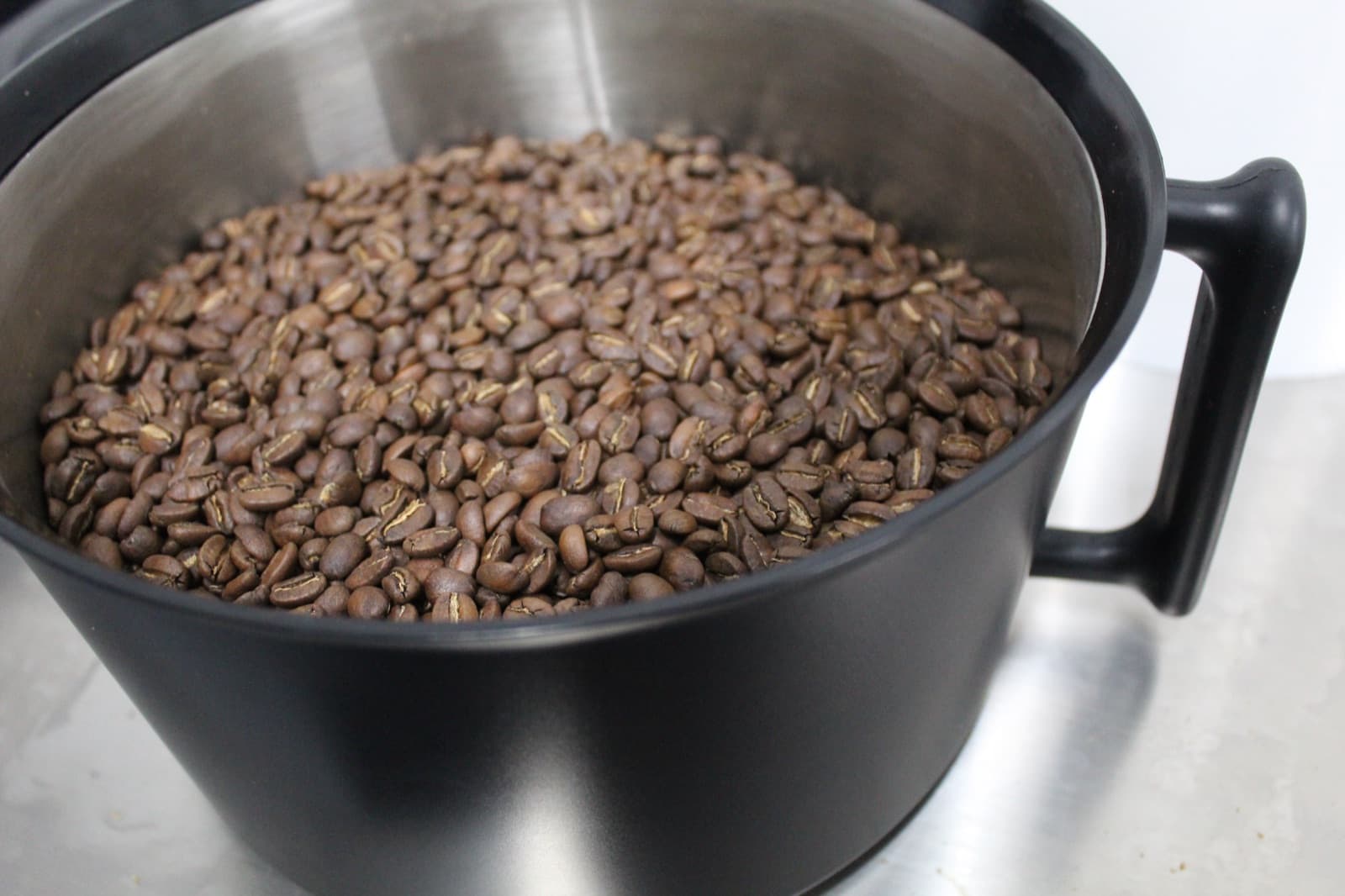
Freshly roasted coffee beans in a black bin at the kWh roastery in York

Ask us anything about a lot

For every coffee we roast we hold the farm or co-op, the country and region, the importer, the harvest year, the process, the varietal and the cup score. Wholesale customers can have all of it for any bag - just ask and we'll send the records over.

What we hold on every lotShown on the website?
Farm or co-opYes
Country and regionYes
Harvest yearYes
ProcessYes
VarietalYes
Cup scoreYes
FreightYes
Which importer brought it inOn request
Request lot records

What we don't say

We don't call our coffee carbon-neutral, we don't claim we're 100% renewable, and we won't tell you it's “ethically sourced” without showing you why. Where we've got a number we'll show you how we got it, and where we haven't got one we'll say so.

More on how we handle procurement claims

Come and taste it

Everything on this page is in the shop, and if you're a business we'll happily send samples and the paperwork to go with them.

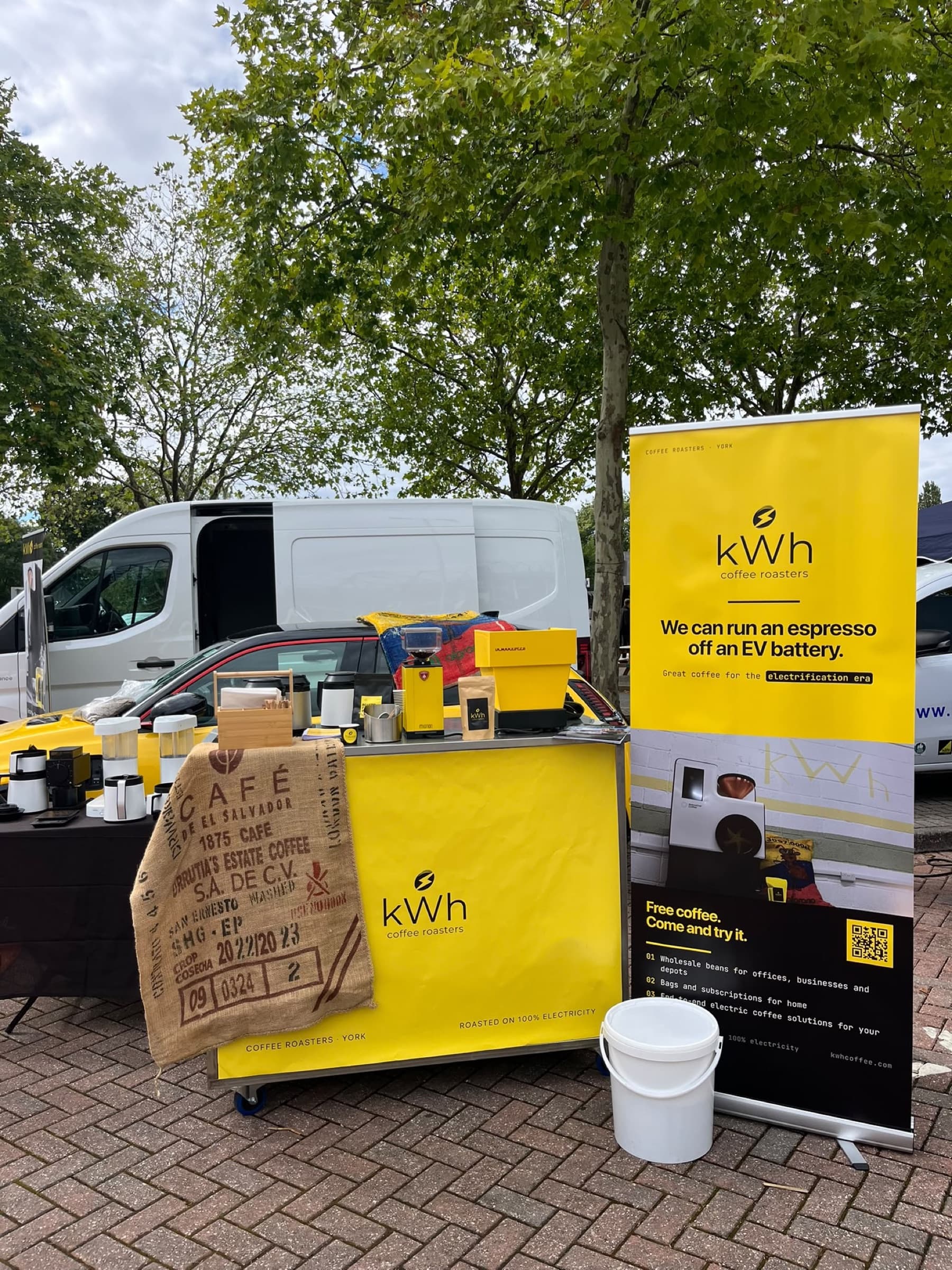
The kWh Coffee Roasters stall at an outdoor event: a yellow coffee cart with a grinder and a coffee sack draped over the front, beside a banner reading 'We can run an espresso off an EV battery'